CLOZE TEST DEVELOPMENT AND APPLICATION WORKSHOP
A PEDAGOGICAL SUGGESTION TO ASSESS STUDENTS’ READING PROFICIENCY
DOI:
https://doi.org/10.32748/revec.v10i25.21467Keywords:
COVID-19, quality education, Cloze procedure, reading comprehensionAbstract
This article is the result of a workshop presented to elementary school teachers to analyze the impact of the COVID-19 pandemic on students' reading. It is also an action to fit the 4th objective of the United Nations Organization's (UNO) sustainable development goal, related to quality education. The workshop was divided into two parts: introducing the four main brain lobes and the areas responsible for various human activities, including reading (Dehaene, 2012; Morais, 1996), and describing the Cloze background, functioning and organization, kinds of readers, and how to identify them through this pedagogical tool (Taylor, 1953; 1957; Bormuth, 1968). It is hoped that teachers will use this procedure to help improve students’ reading and teachers’ practices.
Downloads
References
Abreu, K. N., Garcia, D. C. de, Hora, K. de F. P.N.A. da & Souza, C.R. de. (2017). O teste de Cloze como instrumento de medida da proficiência em leitura: fatores linguísticos e não linguísticos. Revista de Estudos da Linguagem, Belo Horizonte, 25 (3), 1767-1799. DOI: https://doi.org/10.17851/2237-2083.25.3.1767-1799
Alcântara, P. J., Tejada, J. (2023). A visão e o processo de leitura. In: Pra ler melhor. No prelo. Organizadores: Raquel Freitag e Julian Tejada, org. Edital 08/2023 SEDUC. No prelo. 5-20
Ayaga, V. (2023, 3 de outubro). Fovea of the eye. Vision center . Acessed in: https://www.visioncenter.org/eye-anatomy/fovea/.
Azevedo, I.C.M.D, Damaceno, T.M.D.S.S. Desafios do BNCC em torno do ensino de língua Portuguesa na Educação Básica. Revista de Estudos da Cultura./ Nº 7/ Jan. Abr./2017. DOI: https://doi.org/10.32748/revec.v0i7.6557
Bormuth, R. J. (1968). Cloze test readability: Criterion reference scores. Journal of Educational Measurement. Accessed in: http://dx.doi.org/10.1111/j.1745-3984.1968.tb00625.x DOI: https://doi.org/10.1111/j.1745-3984.1968.tb00625.x
Brasil. Ministério da Educação. (2017). Base Nacional Comum Curricular.
Brasil. Ministério da Educação. (2022, 16 de setembro). Instituto Nacional de Pesquisas Educacionais Anísio Teixeira. Sistema de Avaliação da Educação Básica. (Saeb). Accessed in: https://download.inep.gov.br/institucional/apresentacao_saeb_ideb_2021.pdf.
Brennan, J. R. (2022). Language and the Brain. A slim guide to neurolinguistics. Oxford University Press.
Brown, J. D. (1980, Autumn,). Relative merits of four methods for scoring Cloze tests. The Modern Language Journal, 64 (3), 311-317 DOI: https://doi.org/10.1111/j.1540-4781.1980.tb05198.x
Brown, J. D. (2013, January). My twenty-five years of cloze testing research: so what? International Journal of Language Studies. University of Hawai’i at Manoa, USA. 1(1), 1-32.
Cardoso, P. B., Menezes, & K. V. (2023). Adivinhando palavras. In: Pra ler lelhor. No prelo. Organizadores: Raquel Freitag e Julian Tejada, org. Edital 08/2023 SEDUC. 63-71.
Cardoso, P. B., Menezes, K.V, Freitas, F.O. & Freitag, R.M.K. Eficiência na leitura: medidas de precisão e velocidade entre alunos do Colégio de Aplicação da Universidade Federal de Sergipe. Revista Científica Sigma, Macapá, v.5, n.5, p.120-143, jan.-jun.2024.
Coltheart, M. (2005). Modeling Reading: the dual route approach. In: The Science of reading: A Handbook. Edited by Margaret J. Snowling and Charles Hulme. Blackwell Publishing.
Cunha, N. de B. (2009). Diagnóstico de compreensão de leitura por meio do teste cloze. In: Congresso de Leitura do Brasil, 17., , Campinas. Anais 17 Campinas. Unicamp, 238-247. Acessed in: https://alb.org.br/arquivo-morto/edicoes_anteriores/anais17/txtcompletos/sem10/COLE_1414.pdf.
Dehaene, S. (2013, jan./mar.). A aprendizagem da leitura modifica as redes corticais da visão e da linguagem verbal. Letras de Hoje, Porto Alegre, 48 (1), 148-152.
Dehaene, S. (2012). Os neurônios da leitura: como a ciência explica a nossa capacidade de ler. Tradução: Leonor Sciliar-Cabral. – Porto Alegre: Penso.
Freitag. R.M.K. Lendo em voz alta. In: Pra ler lelhor. No prelo. Organizadores: Raquel Freitag e Julian Tejada, org. Edital 08/2023 SEDUC. 56- 62 DOI: https://doi.org/10.31234/osf.io/2vpc7
Freitag, R.M.K., Sá, J. J. de S. Leitura em voz alta, variação linguística e o sucesso na aprendizagem inicial da leitura. Ilha do Desterro, v.72, p.41-62, 2019. DOI: https://doi.org/10.5007/2175-8026.2019v72n3p41
Freitag, R. M. K., Sarmento, V. H. Costa, C. C., & Santos, K. L. (2014). Teste Cloze e a competência em leitura de universitários: uma experiência no curso Química/Licenciatura da UFS/Itabaiana. InterSciencePlace, 1-13. DOI: https://doi.org/10.6020/1679-9844/3001
Freitas, F.O.F, Santos, G. E. D, Freitag, R.M.K. The use of the Cloze test in reading comprehension assessment in Brazil: post-pandemic challenges. DOI: 10.22541/au.171438343.35331103/v1 DOI: https://doi.org/10.22541/au.171438343.35331103/v1
Images from the lobes of the brain. (2023, November 11). Accessed in: https://stock.adobe.com/br/search?k=lobe&asset_id=599116539.
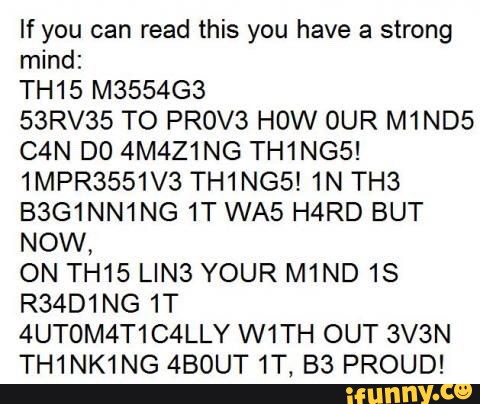
If you can read this image. (2023). Accessed in: https://img.ifunny.co/images/c54fbb4d84a8f1728320cd85eba4ae30a2d72b7a40f9cccf6d762e05ddb1c944_1.jpg
Leal, V.C., Menezes, T. S. Leitura multimodal. In: Pra ler lelhor. No prelo. Organizadores: Raquel Freitag e Julian Tejada, org. Edital 08/2023 SEDUC. 34- 43
Machado, A. P.G (2018). Fluência em leitura oral e compreensão em leitura : automaticidade na decodificação para a compreensão leitora (Tese de Doutorado). Universidade Federal de Sergipe, São Cristóvão.
Perfetti, C., Stafura, J. (2014). Word knowledge in a theory of reading comprehension. Scientific Studies of Reading, 18, 22-37, Routledge Taylor and Francis Group. DOI: https://doi.org/10.1080/10888438.2013.827687
Quirk, R., Greenbaum, S., Leech, G., & Svartvik, J. (1985). A comprehensive Grammar of the English Language. Longman.
Sõhngen, C. (2022, june). O procedimento “cloze”. Letras de Hoje. Porto Alegre, 37 (2), 65-74.
Suehiro, A. C. B., Burochovithc, E. (2016, set./dez.). Compreensão em leitura em estudantes do Terceiro e Quarto ciclos do Ensino Fundamental. Psico-USF, Bragança Paulista, 21(3), 561-572. DOI: https://doi.org/10.1590/1413-82712016210310
Taylor, W. L. (1953). Cloze procedure: a new tool for measuring readability. Journalism Quarterly, Questia Trusted Online Research, v.30, 415-433. DOI: https://doi.org/10.1177/107769905303000401
Taylor, W. L. (1957) “Cloze readability scores as índices of individual diferences in comprehesnion and attitude. Institute of Communications Research, University of Illinois. Journal of Applied Psychology. Vol.41, No.1, 1957. DOI: https://doi.org/10.1037/h0040591
United Nations Organization. Accessed in: https://www.un.org/en/
Downloads
Published
How to Cite
Issue
Section
License

A REVEC utiliza a Licença Creative Commons CC BY 4.0, que permite aos licenciados copiar, distribuir, exibir, executar e criar obras derivadas, desde que seja atribuído o devido crédito ao autor ou ao licenciador.
A revista reconhece que os autores mantêm os direitos autorais sobre suas produções, mas é necessário que concordem em conceder à REVEC o direito de primeira publicação. Além disso, os autores devem estar cientes de que:
- Em qualquer publicação posterior, seja em repositórios institucionais, capítulos de livros ou outras produções derivadas, deve ser indicado o crédito à publicação original na REVEC.
- É permitido e incentivado que os autores publiquem e distribuam seus trabalhos online (por exemplo, em repositórios institucionais ou páginas pessoais) antes ou durante o processo editorial, pois isso pode gerar melhorias no texto e aumentar o impacto e a visibilidade da pesquisa publicada pela revista.